How to Say I Love You in Baby Language
We all detest seeing our kids unhappy—but when baby is also young to speak, it can be difficult to know exactly what your little 1 wants. In recent years, more and more parents are turning to babe sign language to help boost communication with their preverbal kids.
Baby sign language is a set of simple hand gestures (aka signs) that correspond to common words yous use with baby every day. Sometimes the baby signs are the same as those used in American Sign Language (ASL), only not ever.
Wondering how to teach baby sign linguistic communication? A practiced time to start is when infant is 4 to 6 months quondam, co-ordinate to Jann Fujimoto, CCC-SLP, a certified speech-linguistic communication pathologist in Wisconsin. There are different approaches to teaching baby sign language (there are lots of classes and books on the topic), but generally, you can teach baby by saying a word like "milk," while making the sign at the same time, and then giving infant the milk.
Repetition—and patience—is fundamental. Keep in mind, your trivial one likely won't start making signs on their ain until they're nigh 6 to ix months.
When you're prepare to begin instruction babe sign language, you lot'll need to make up one's mind which baby signs to start with. Consider which words you lot and your family unit utilize the most on a day-to-day footing. Need some help? Here, nosotros've illustrated how to teach 25 mutual baby signs.
In this article:
Common baby signs
Baby sign language chart
Mutual Baby Signs
Ready to learn how to teach baby sign language? We're betting these basic babe signs will exist amid the first ones you teach your little i. Hither'south how to make them.
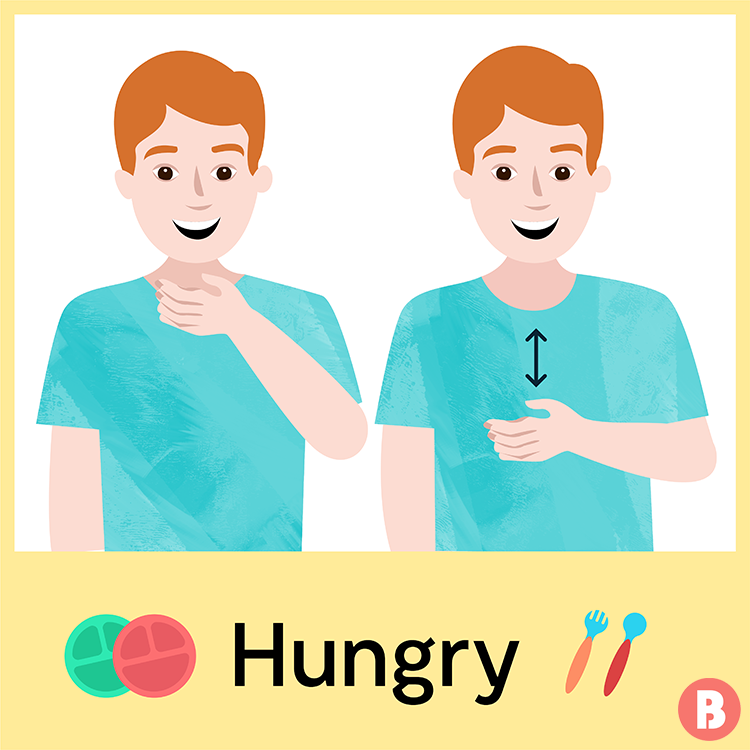
Image: Kitkat Pecson

"Hungry" in sign language
It's important for babe to be able to communicate when they're tummy feels empty—you know, before they go hangry. Teach them how to evidence you lot they're "hungry" in sign language. You can make the sign for "hungry" by cupping your hand around your neck to make a C shape, so move your hand downwards from your neck to your stomach.
Epitome: Kitkat Pecson
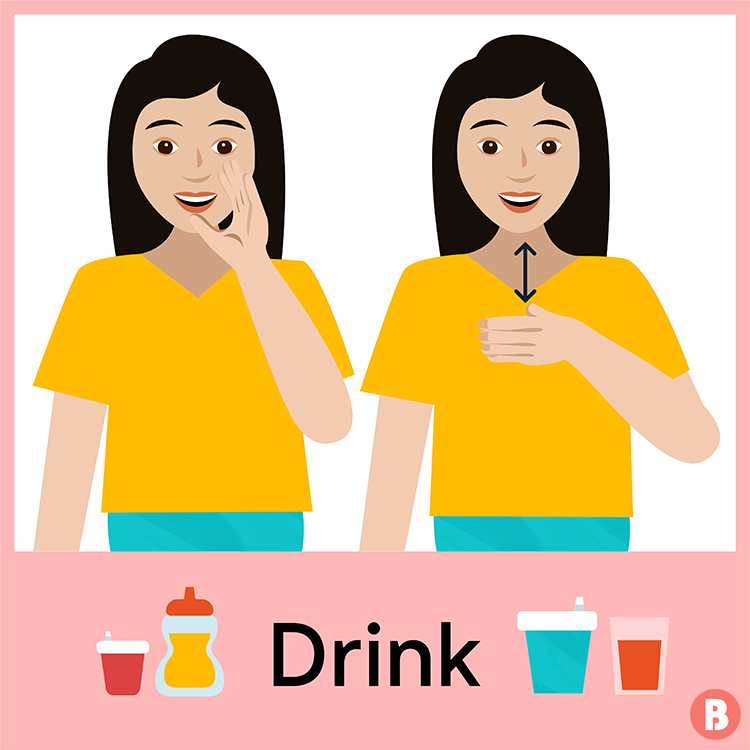
"Potable" in sign language
Want to larn how to sign "drink" in sign language? This one involves mimicking the activity! Brand a C shape with your hand, as if you lot were holding a cup, and so move it to your oral cavity as if yous were drinking from it.
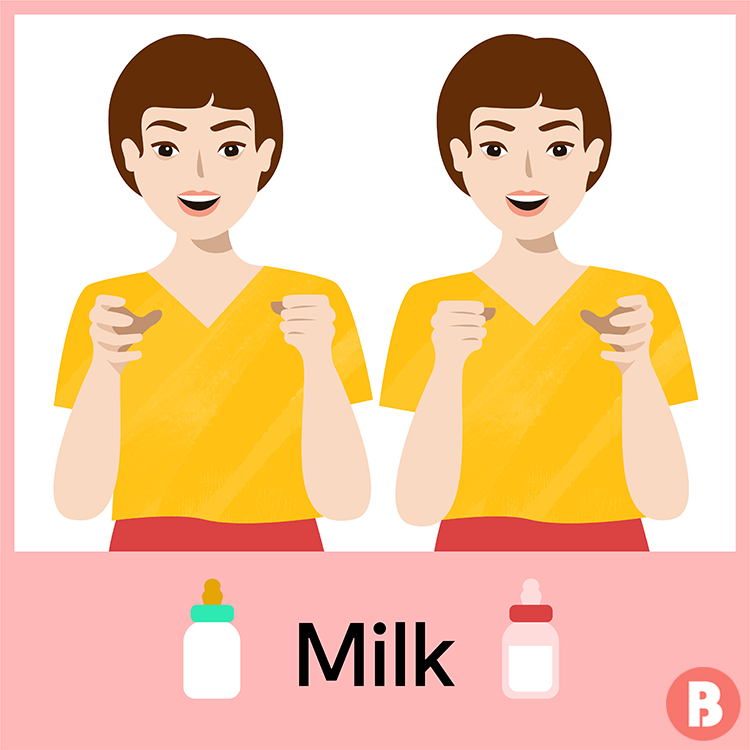
Image: Kitkat Pecson
"Milk" in sign linguistic communication
Wondering how to teach infant sign language? Information technology'south best to start with something baby knows, likes and wants—for case, milk. Y'all tin communicate the word "milk" in sign language, by making two fists, and then extend your fingers and bring them dorsum into fists.
Epitome: Kitkat Pecson
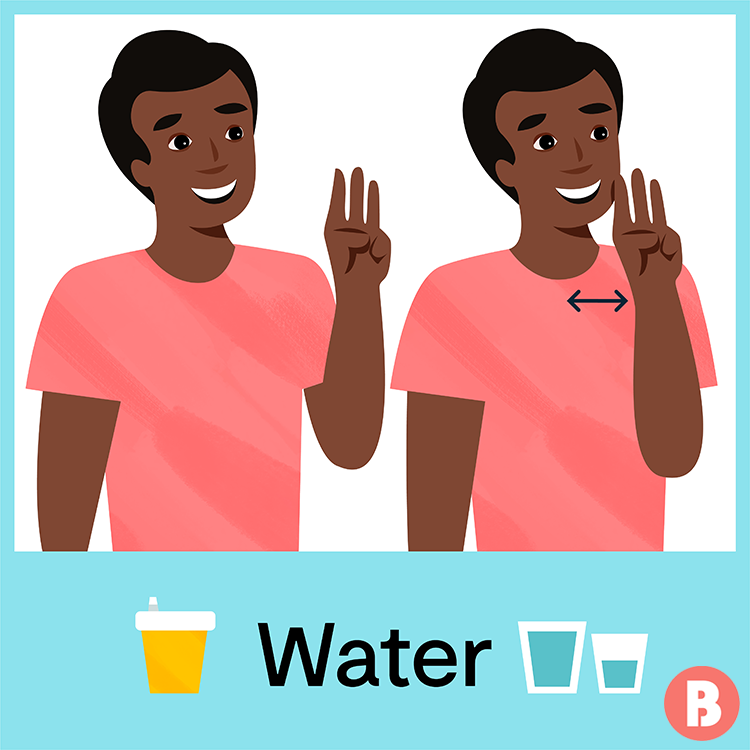
"H2o" in sign language
Teach baby how to request "h2o" in sign language, and you'll ever know when your little one wants their sippy cup. The sign for "h2o" is made by extending your three middle fingers then they're pointing up, with your thumb and pinkie tucked downwardly, and then tapping your alphabetize finger to your chin.
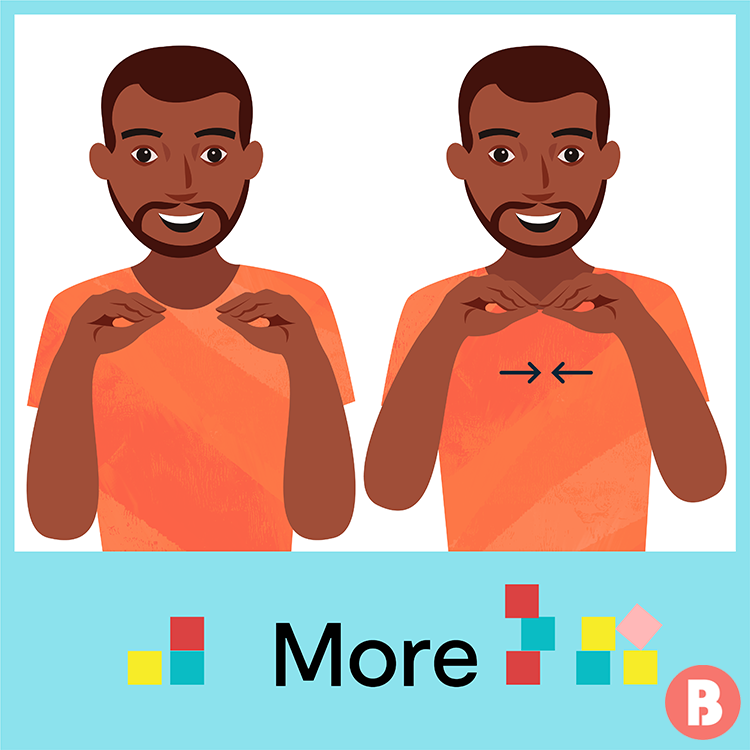
Image: Kitkat Pecson
"More" in sign language
Practice you have trouble knowing if and when babe wants extra spoonfuls of their favorite puree? "More than" is another important word for you and infant to learn. To express "more" in sign language, pinch your thumbs and fingers together on both hands, creating ii O shapes, then tapping your fingertips together a few times.
Prototype: Kitkat Pecson
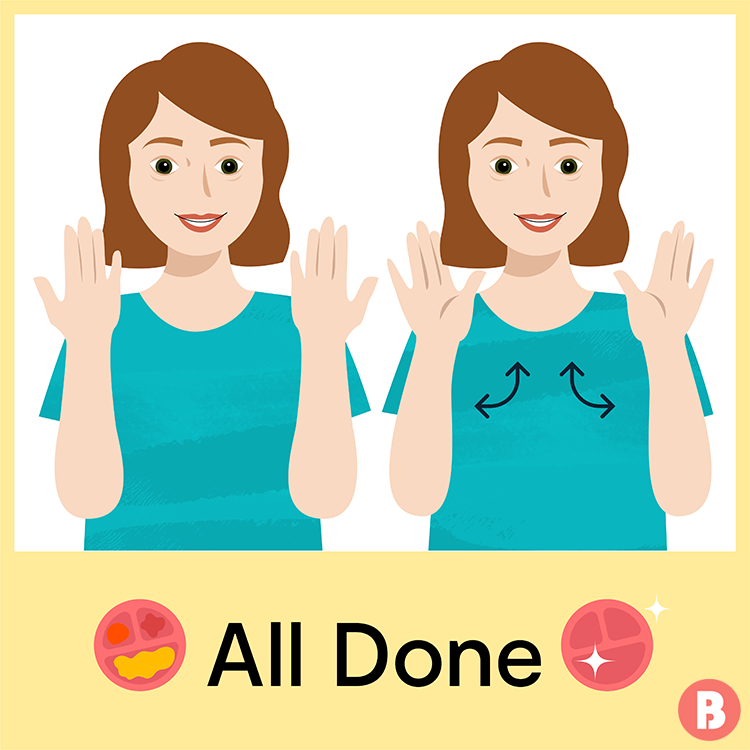
"Washed" in sign language
When baby is full, they want you to cease shoving that spoon toward their oral cavity. Teach them to let yous know they're "all done" without fussing by using the ASL sign for "finished." Get-go with your hands up, palms facing toward yous, and turn them until your palms face up out.
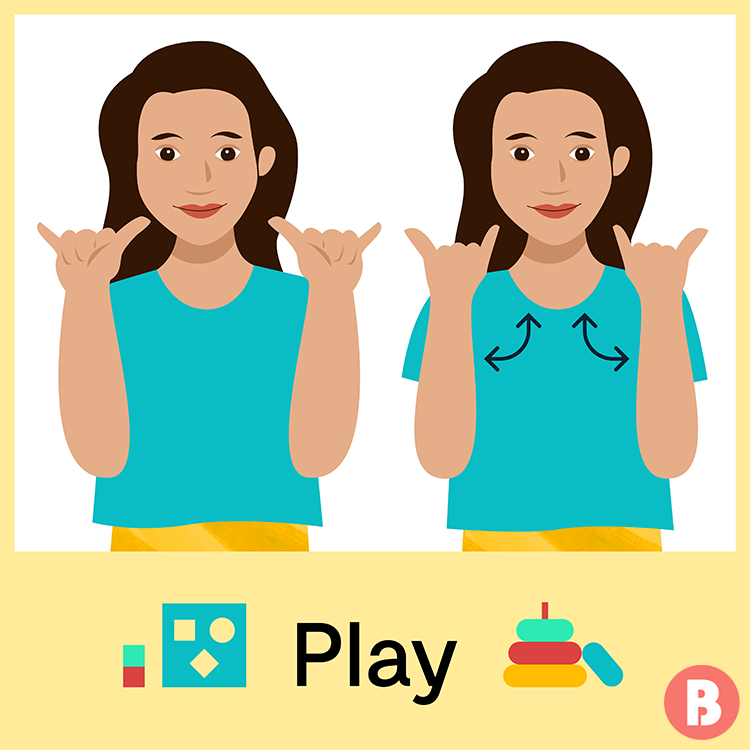
Image: Kitkat Pecson
"Play" in sign language
When it comes to babe sign language, the sign "play" certainly belongs in your arsenal. To communicate "play" in sign language, clench your fingers to your palms, leaving your thumbs and pinkies extended; then with palms facing you, twist your wrists back and along.
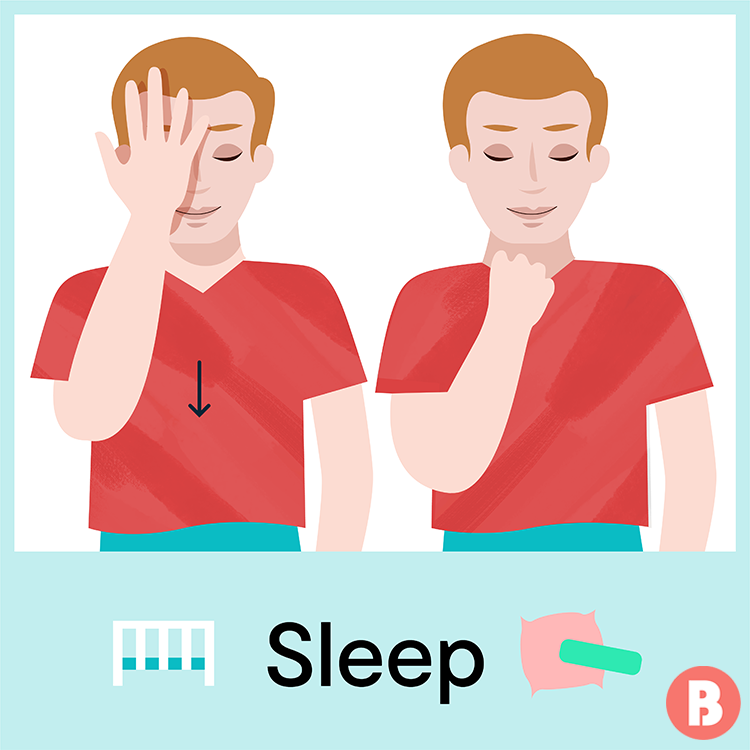
Image: Kitkat Pecson
"Sleep" in sign language
Nobody likes having a fussy, sleep-deprived infant on their hands, so information technology'south a good thought to do "sleep" in sign language. Concur your hand over your brow with your fingers spread apart, then depict your paw down over your face up until your fingers and thumb come together to touch your mentum. Even babies who resist naptime may whip this one out when they're especially exhausted.
Epitome: Kitkat Pecson
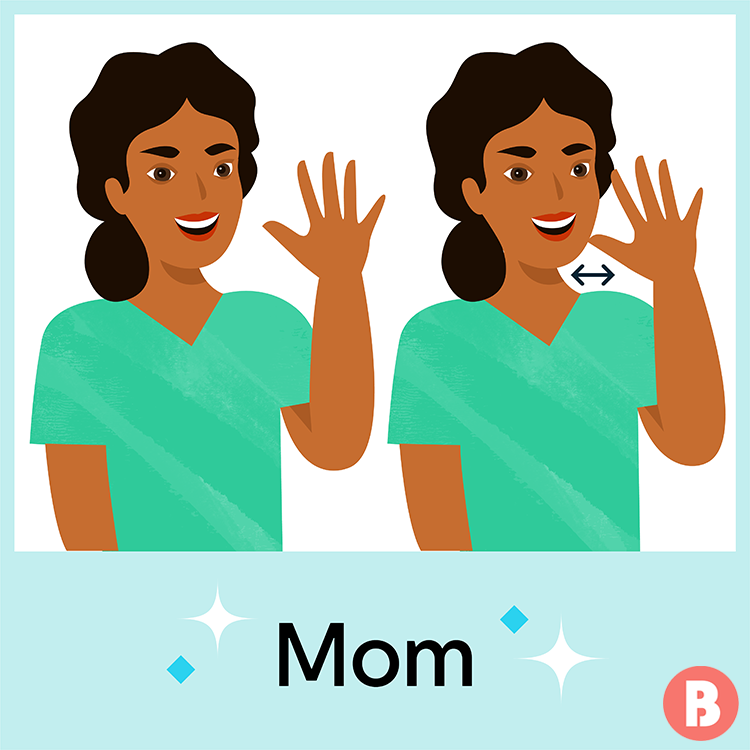
"Mom" in sign language
Your little one will want to know how to address their favorite person in baby sign language. To sign "mom," just spread your fingers apart, then with your pinkie facing forward, tap your thumb to your chin.
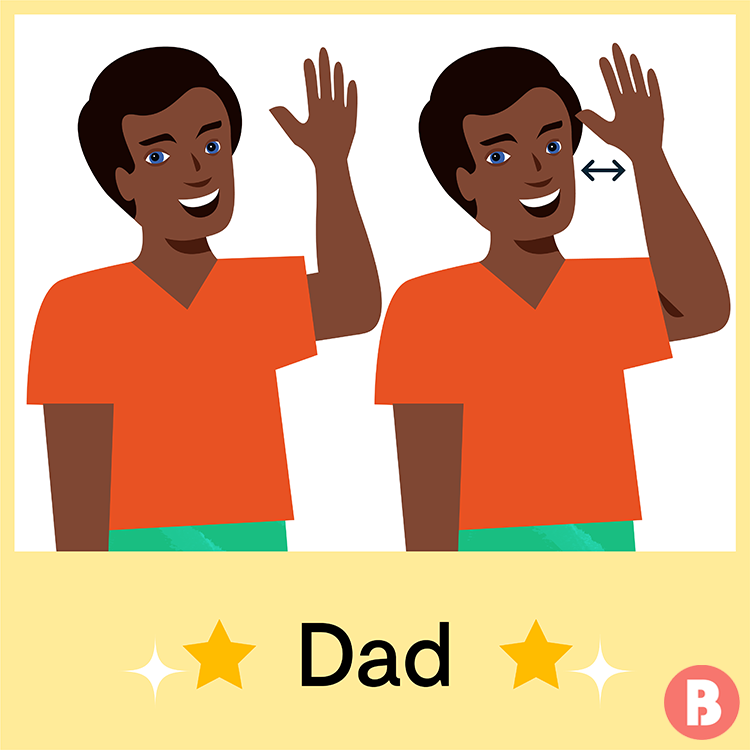
Image: Kitkat Pecson
"Dad" in sign language
Dad will desire in on the fun too! You can make the sign for "dad" by spreading your fingers apart, then with your little finger facing forward, tap your pollex to your forehead.
Prototype: Kitkat Pecson
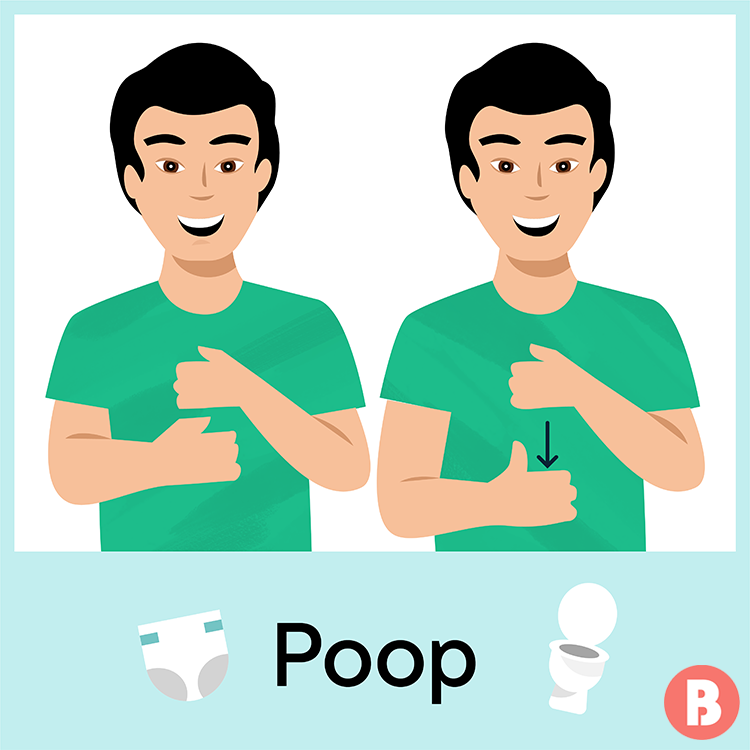
"Poop" in sign language
Everybody does information technology, and so you might equally well acquire to sign information technology! If yous want to indicate "poop" in sign linguistic communication, clench both hands into fists and stack them on top of each other, with the thumb of the lesser paw tucked inside the upper fist. Then, pull your lesser manus down from the upper hand, leaving your thumb extended. Next time baby soils their diaper, they'll let you know—before you lot even smell it.
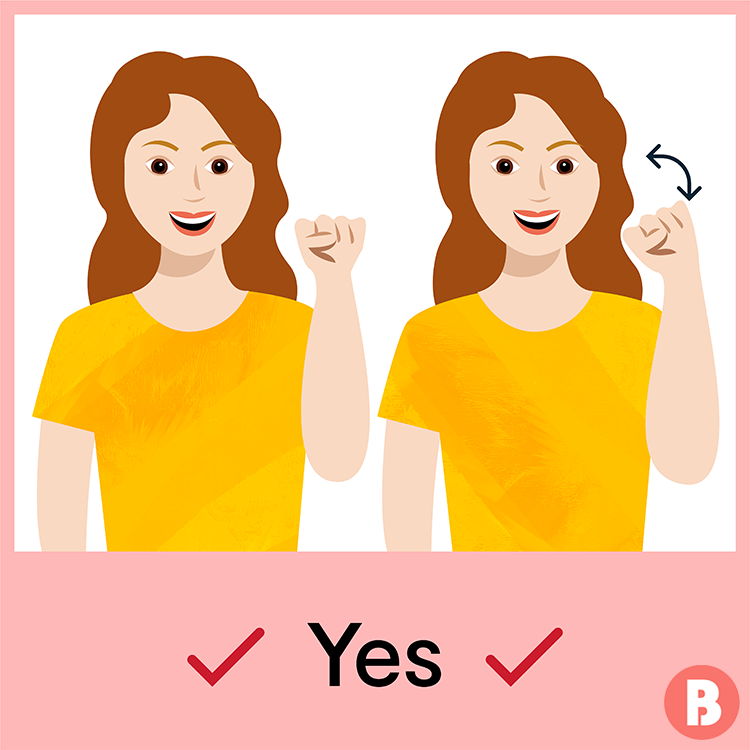
Image: Kitkat Pecson
"Yep" in sign language
Another easy and of import sign to learn is "yes." Enthusiastically nodding your head is not bad, just this sign gives baby yet another another communcation tool. Intuitively, "yes" in sign language looks just like a nodding mitt. Make a fist and then, folding at your wrist, bob your fist up and down.
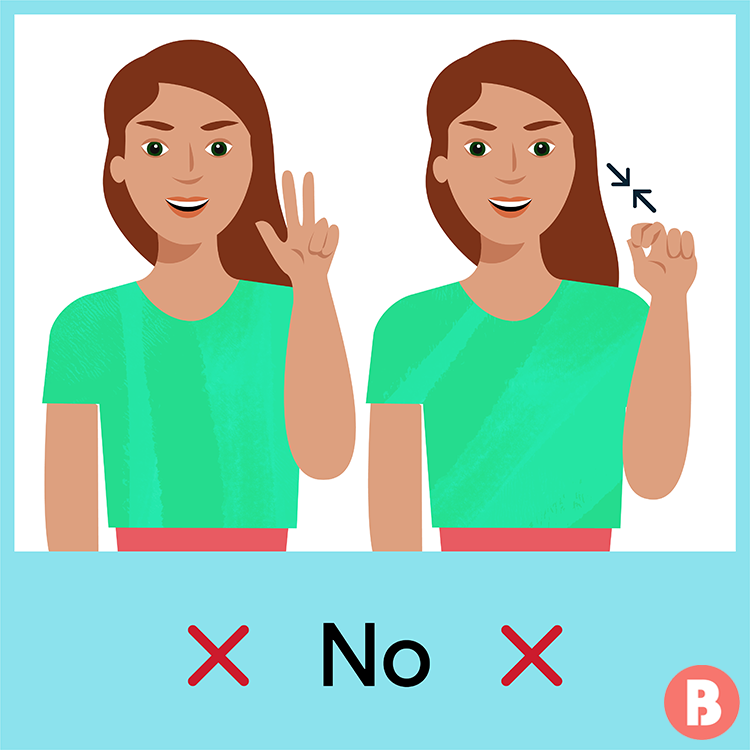
Image: Kitkat Pecson
"No" in sign linguistic communication
Over again, shaking your head works, simply this sign helps reiterate the betoken. To express "no" in sign linguistic communication, extend your thumb, index and center fingers, then chop-chop snap them together.
Paradigm: Kitkat Pecson
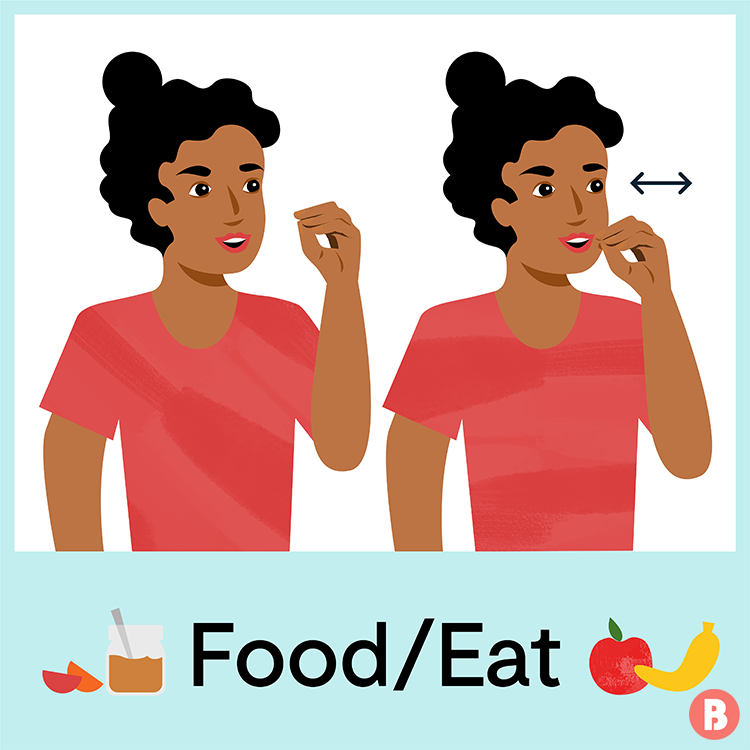
"Food" in sign linguistic communication
Instead of signing "hungry," baby may want to ask for "food." This sign can likewise mean "swallow." Communicate "food" in sign linguistic communication by flattening your fingers on summit of your thumb and and then bringing your fingertips to your rima oris.
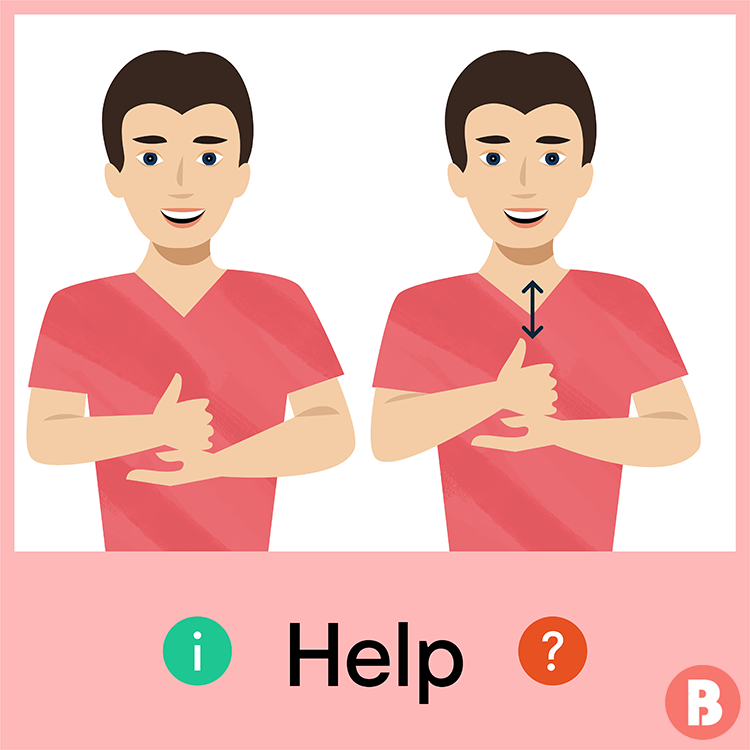
Image: Kitkat Pecson
"Aid" in sign linguistic communication
When learning and teaching baby sign language, be sure to review the sign for "help." This tin can be useful to baby in so many dissimilar situations; plus, being able to ask for back up from a parent or caregiver can assist reduce whatever frustration a baby may experience. If yous desire to communicate "help" in sign language, simply brand a fist with one paw, with the thumb extended, and place information technology over your other mitt, which is extended flat. Then movement both easily up together.
Paradigm: Kitkat Pecson
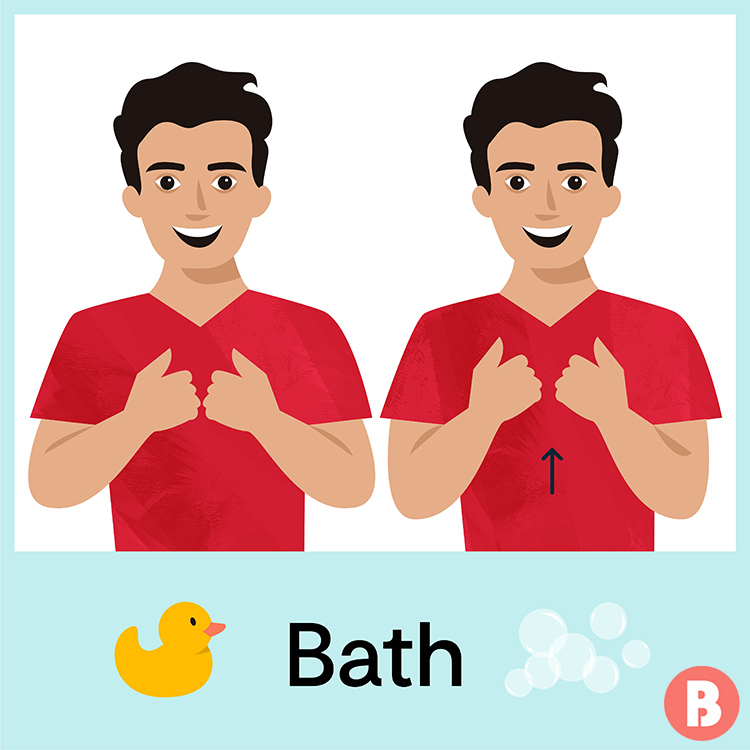
"Bathroom" in sign linguistic communication
Want to tell baby it's bathtime? Express '"bathroom" in sign language by making two fists, then moving them up and down in front of your chest (as if you were scrubbing yourself make clean).
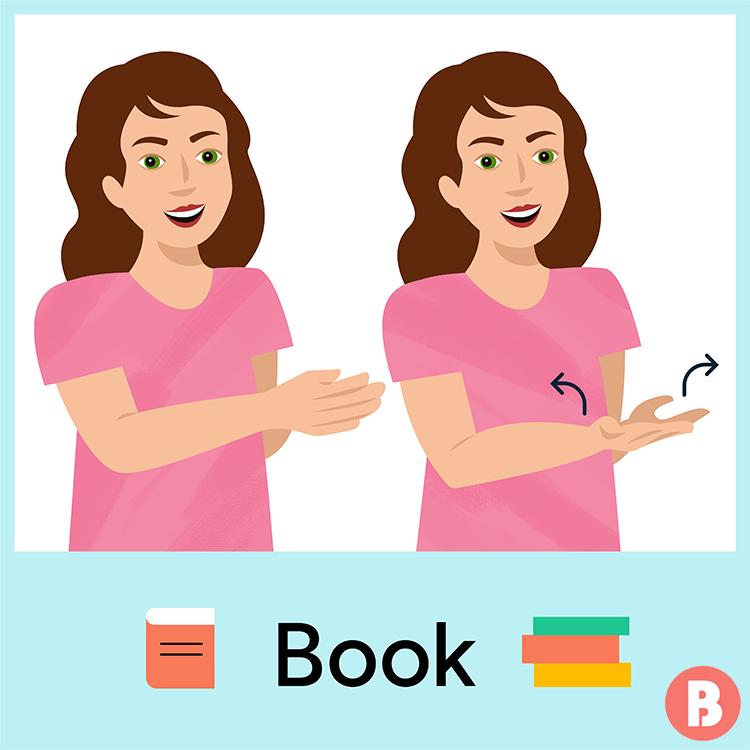
Image: Kitkat Pecson
"Volume" in sign linguistic communication
Storytime is the all-time fourth dimension! Employ your hands to say "book" in sign linguistic communication; clasp your palms together with your thumbs facing up, then hinge open up your hands, keeping your pinkies together (every bit if you were peachy open a book).

Image: Kitkat Pecson
"Medicine" in sign linguistic communication
The sign for "medicine" is made past placing your center finger into the palm of your opposite hand and twisting.
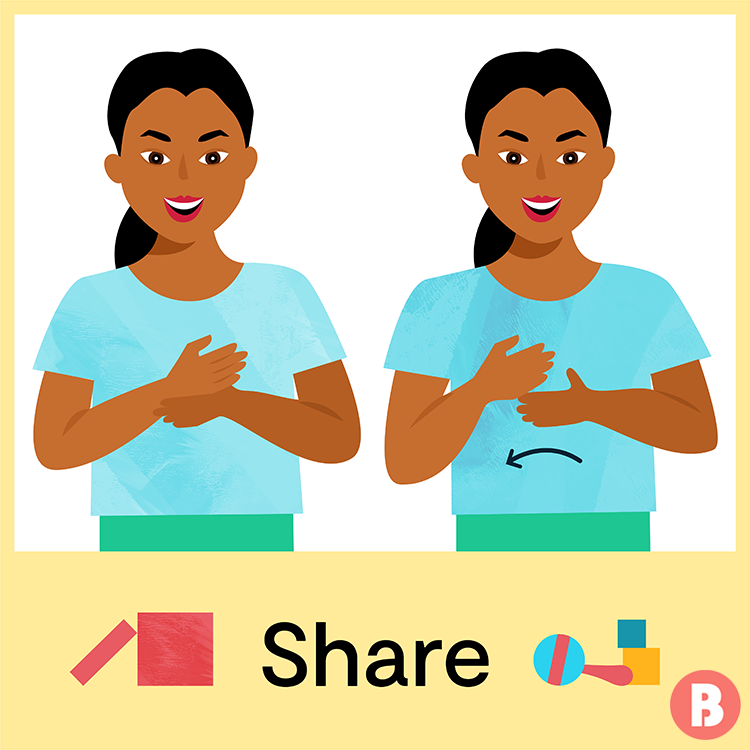
Image: Kitkat Pecson
"Share" in sign language
To sign "share," extend ane hand apartment, with your thumb pointing up. And then, run your other hand back and forth along the meridian of your extended fingers.
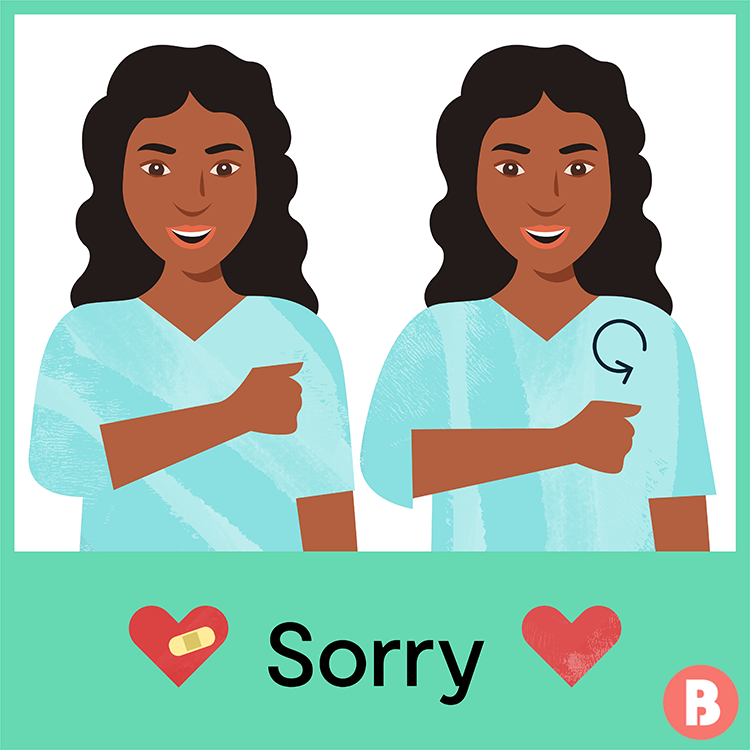
Image: Kitkat Pecson
"Sorry" in sign linguistic communication
Teach baby to show empathy and limited feelings before they know how to practice information technology verbally. The sign for "sad" is made by rubbing a fisted hand in a circle over your chest.
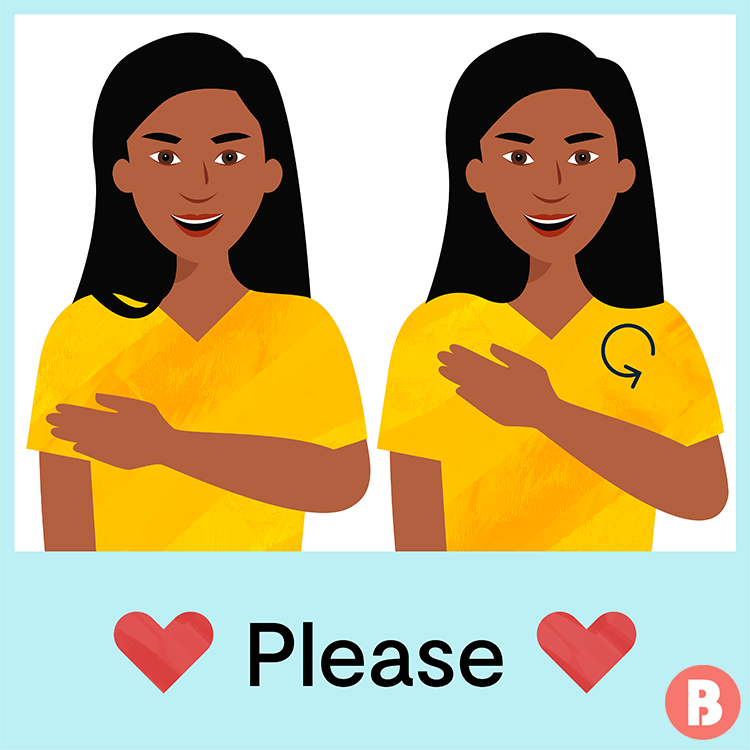
Image: Kitkat Pecson
"Please" in sign linguistic communication
Manners thing. Teach babe to ask for things politely from the starting time. To sign "delight," extend your fingers and thumb out, then rub your flattened palm against your chest in circles.
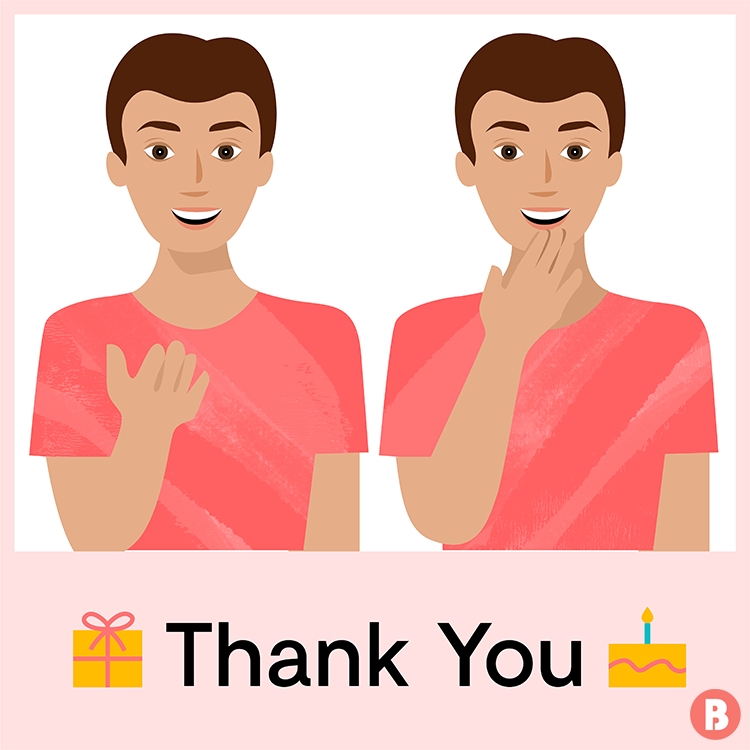
Image: Kitkat Pecson
"Thank you lot" in sign language
Nothing is sweeter than watching your little i limited gratitude. And they'll capeesh it when you show them the same respect and courtesy right back. To sign "cheers," straighten your pollex and fingers, then bring your fingers to your chin and pull them away.
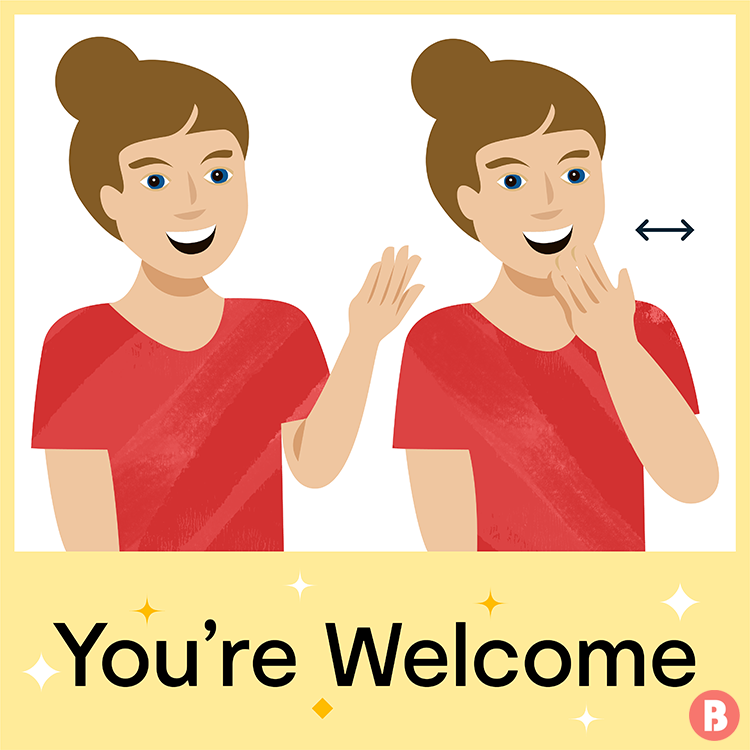
Image: Kitkat Pecson
"You lot're welcome" in sign linguistic communication
The sign for "you're welcome" is the same as the sign for "thank you lot"—flatten your manus, bring your fingers to your chin and pull them back.
Paradigm: Kitkat Pecson
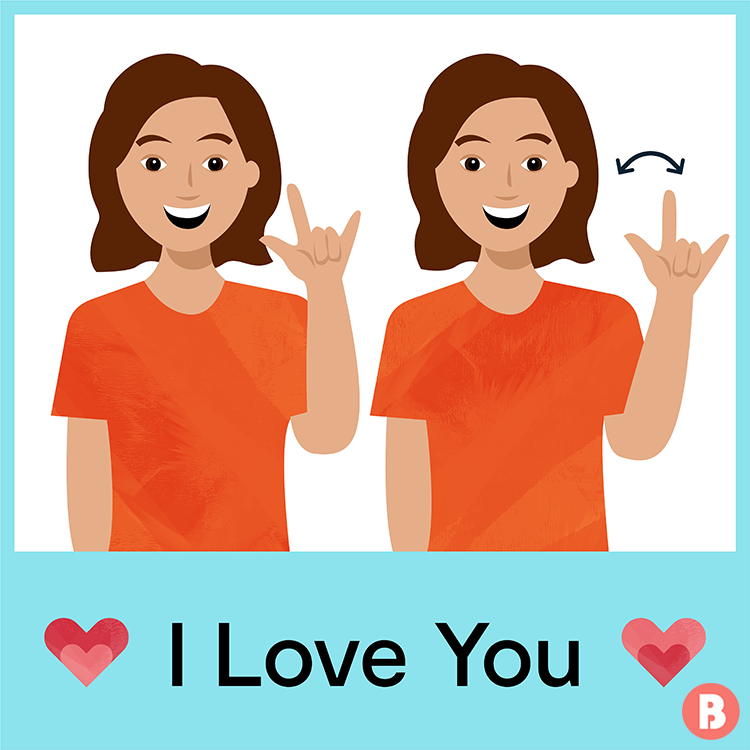
"I love you" in sign linguistic communication
This is one sign y'all're going to both want to use all the time. To sign "I love you," extend your thumb, index and pinkie fingers (simply proceed your ring and center fingers down). Concord your paw out with the palm facing away and rotate your hand side to side.
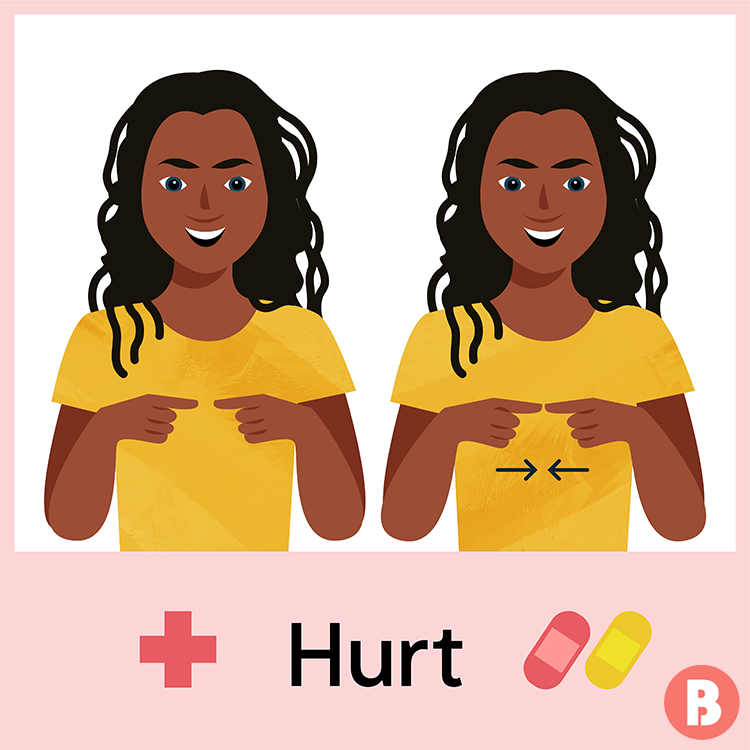
Image: Kitkat Pecson
"Hurt" in sign language
The baby sign for "hurt" is done past clenching both hands into fists, then extending your index fingers and touching them together.
Baby Sign Linguistic communication Chart
Here, y'all can see 25 of the virtually common signs, all in ane comprehensive baby sign linguistic communication chart.
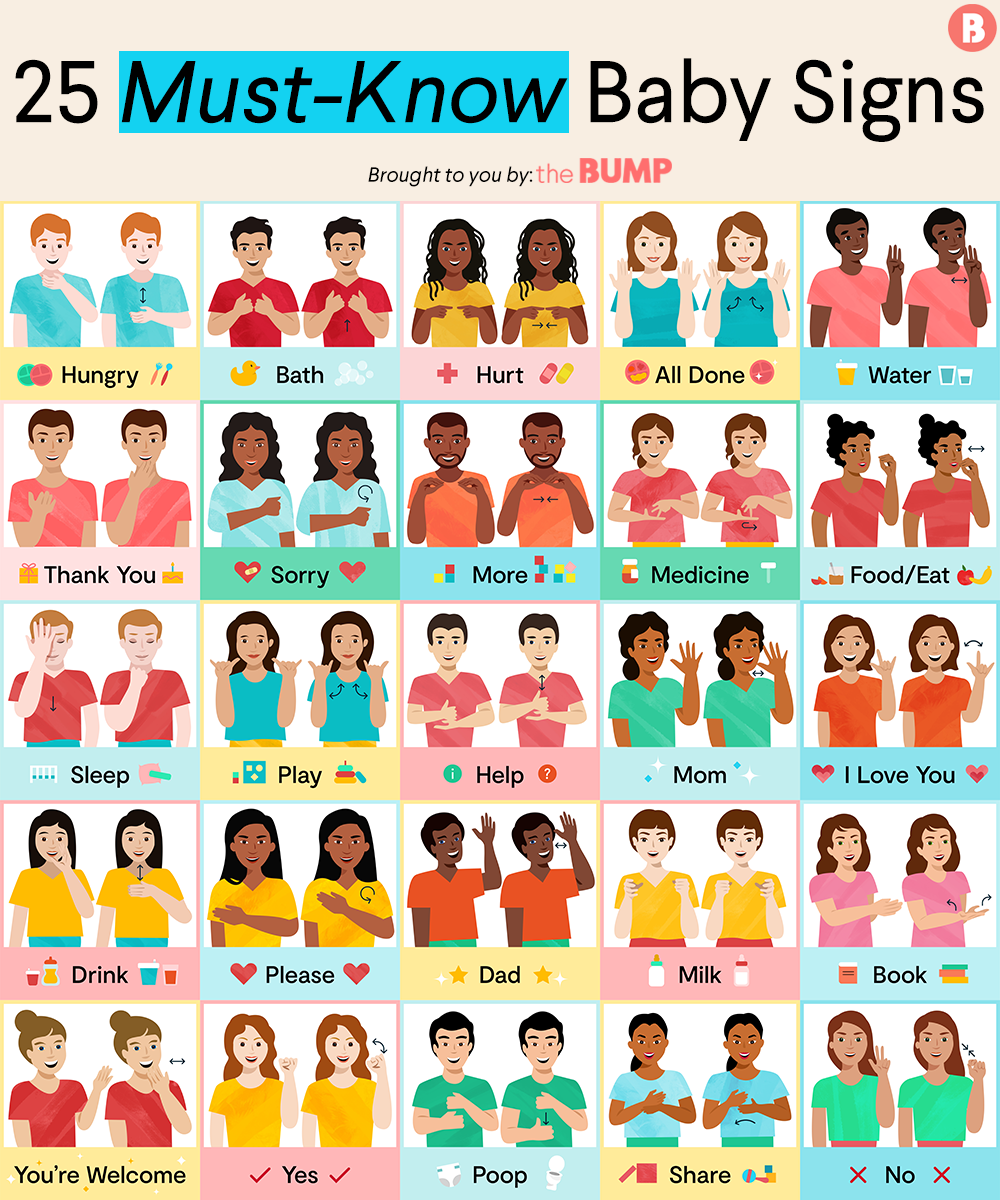
Image: Kitkat Pecson
Now that yous know the basics of how to teach babe sign language, begin practicing a few words you recollect y'all'll use most oft at home. Your little one will love having a special way to communicate their wants and needs with you. What's more, having the power to express your feelings to each other volition help strengthen your bail. It'south a win-win!
About the experts:
Jann Fujimoto, CCC-SLP, is a certified spoken language-language pathologist in Wisconsin. With 17 years of experience, she has worked in birth-to-iii programs, pre-schools and schools, hospitals, skilled nursing facilities and outpatient clinics. She received her MS in communication disorders from the Academy of Texas at Dallas.
Please notation: The Bump and the materials and information it contains are not intended to, and practice not constitute, medical or other health advice or diagnosis and should not be used every bit such. You should always consult with a qualified doctor or health professional about your specific circumstances.
Plus, more than from The Bump:
Source: https://www.thebump.com/a/how-to-teach-baby-sign-language
0 Response to "How to Say I Love You in Baby Language"
Post a Comment